terça-feira, 2 de abril de 2019

The Latest: Pope warns over building walls to bar migrants

RABAT, Morocco — The Latest on Pope Francis' trip to Morocco: (all times local):

9:50 p.m.

Pope Francis is warning that political leaders who want to build walls to keep out migrants "end up prisoners of the walls that they build."

Francis said he simply couldn't understand in his head or his heart how a government could be so cruel as to put up concertina-wired fences to keep out migrants, or prevent migrant rescue boats from docking in ports.

Speaking en route home from Morocco, Francis said: "This is not the way to resolve the serious problem of immigration. I understand a government has a hot potato in its hands. But it has to resolve it in other ways, humanely."

Francis said he wept after a Spanish journalist showed him a piece of concertina wire from the border at Spain's North African enclave of Ceuta.

___

3 p.m.

Organizers say some 10,000 people are attending Pope Francis' public Mass in Morocco, most of them foreigners representing about 60 countries.

The liturgy held in a sports arena in Morocco's capital of Rabat on Sunday was the final event on the schedule for the pope's two-day visit.

Nora Moso is originally from the Philippines and works in Casablanca as a nanny. She said she was grateful her employer gave her the day off so she could attend the Mass.

Diego Sanchez lives in Ceuta, the Spanish enclave in North Africa that is a destination of migrants who pour into Morocco hoping to find a way to Europe.

Sanchez says he thinks Catholicism is multiracial and universal. He said: "We have people from European origins, we have people from Arab origins, we have people from Africa sub-Saharan origins, so we are very happy."

___

11:20 a.m.

Moroccans who converted to Christianity are hoping Pope Francis' visit will compel Moroccan authorities to become more tolerant of respecting religious freedom.

The number of Moroccan converts from Islam is estimated to between 2,000 and 6,000. They must practice Christianity privately, often holding house Masses and having to hide their religious affiliations for fear of prosecutions and arrests.

Many came to the kingdom's capital, Rabat, to attend Francis' Mass on Sunday.

Adam Rbati, a Moroccan Christian, told The Associated Press that he was pleased the pope made the visit and hoped it would lead to positive change.

Rbati said: "We are really happy. With this visit, we want to tell the pope and the Moroccan society that we are proud to be Christians. It might not change much, but it will certainly create the space for future positive change."

He is attending the Mass with his wife, also a Moroccan Christian, and their newborn son.

___

9:55 a.m.

Pope Francis is turning his attention to Morocco's small Christian community during a two-day visit after already reaching out to the kingdom's Muslim majority and calling for a greater welcome for its growing number of migrants.

On his second and final day in Morocco, Francis is visiting a church-run social services center, meeting with Catholic priests and other Christian representatives, and celebrating a Mass on Sunday.

Morocco has become the main departure point in Africa for migrants attempting to reach Europe after Italy essentially closed its borders to asylum-seekers leaving from Libya.

Francis thanked Morocco on Saturday for protecting migrants and warned that walls won't stop people from trying to escape terrible conditions in their home countries.

He addressed migrants directly: "You are not the marginalized. You are at the center of the church's heart."

Racist woman berates gas station customer for speaking Spanish: ‘Trump needs to hurry up and build the wall!’

*/ ]]>

Pope criticizes building walls to keep migrants out

ABOARD THE PAPAL PLANE,  (Reuters) – Pope Francis said yesterday that political leaders who want walls and other barriers to keep migrants out "will end up becoming prisoners of the walls they build".

The pope made his comments to reporters aboard the plane returning from Morocco in response to a question about migration in general and about U.S. President Donald Trump's threat to shut down the southern border with Mexico.

"Builders of walls, be they made of razor wire or bricks, will end up becoming prisoners of the walls they build," he said.

Francis, who did not mention Trump in his response, has sparred with the U.S. president before over migration, which was a theme of several questions on the plane as well as during the trip to Morocco.

Trump has declared a national emergency to justify redirecting money earmarked for the military to pay for his promised U.S.-Mexico border wall.

"I realize that with this problem (of migration), a government has a hot potato in its hands, but it must be resolved differently, humanely, not with razor wire," the Argentine-born pope said on the plane.

Addressing Moroccan leaders on Saturday, Francis said that problems of migration would never be resolved by physical barriers but instead required social justice and correcting the world's economic imbalances.

"With fear, we will not move forward, with walls, we will remain closed within these walls," he said on Sunday.

Besides the United States, migration has again risen to the fore of national political debates in a number of North African and European countries.

On the plane, Francis repeated some of the key points of his views on migration.

He said wealthy countries should help eliminate the root causes of migration such as poverty, war and political instability.

Migrants should be accepted, protected and integrated and if a country cannot handle the numbers, the migrants should be distributed among other countries, he said.

quinta-feira, 28 de março de 2019

Artist building cheese wall along US-Mexico border to 'Make America Grate Again'

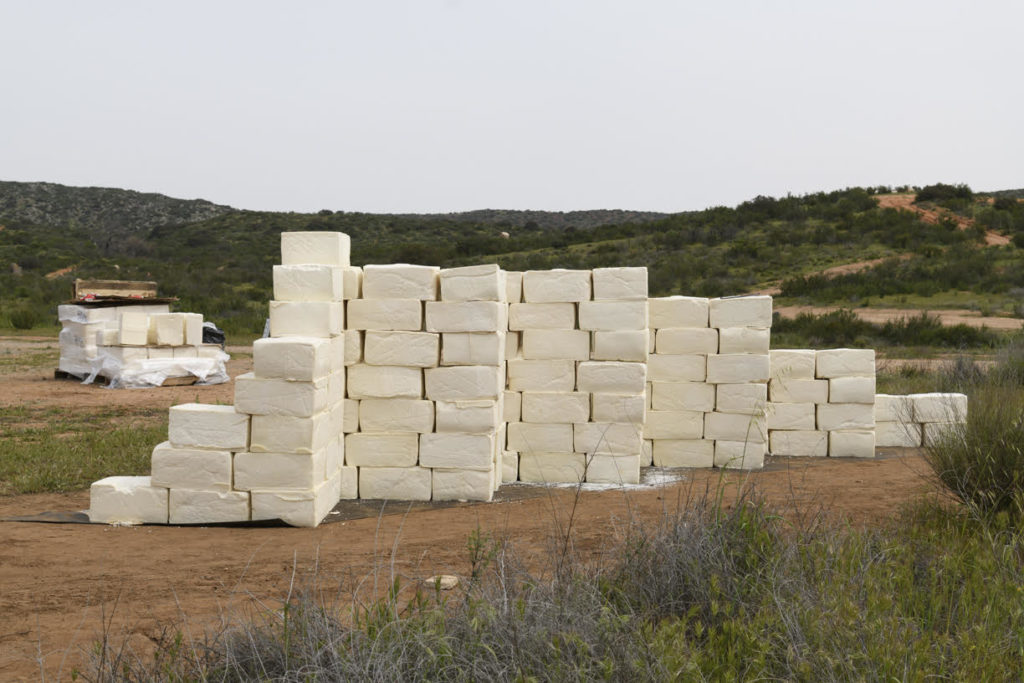
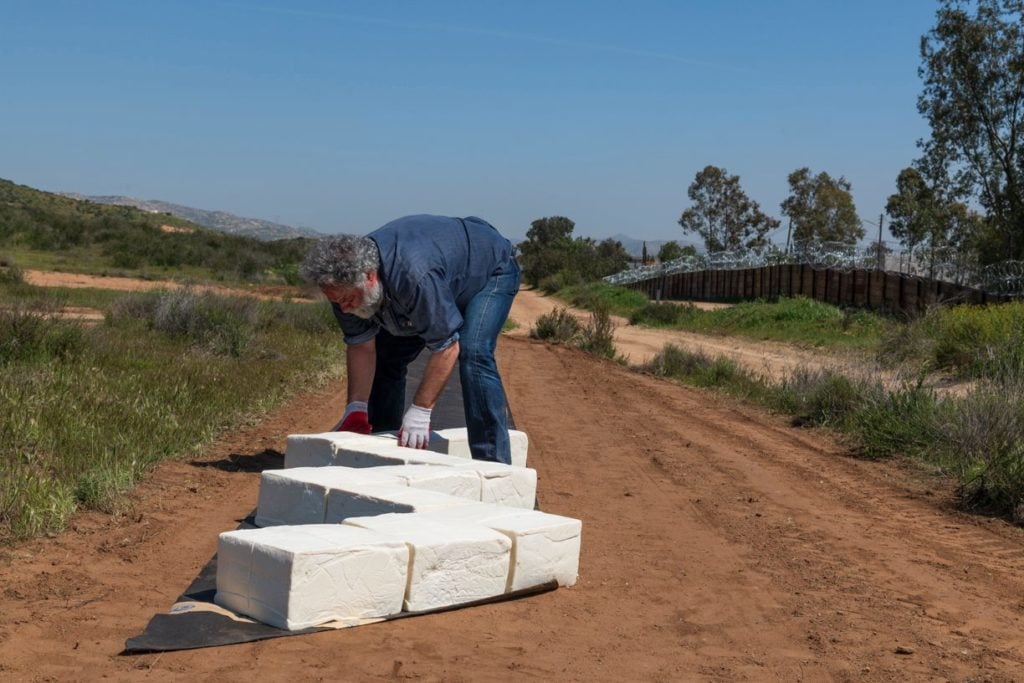
An artist has started building a wall made out of cheese blocks along the U.S.-Mexico border in a bid to "Make America Grate Again."

The Los Angeles-based artist, Cosimo Cavallaro, said he hopes to show how his wall and President TrumpDonald John TrumpTrump says wind power doesn't work because 'it only blows sometimes' Fuel standards to prevent overdependence on foreign oil are out of date Trump knocks MSNBC, CNN rankings: 'Fake News never wins!' MORE's long-proposed border wall are similarly pointless.

"The first thing that comes to your mind is that it's absurd," Cavallaro said of the project in a recent interview with The Los Angeles Times. 

"To spend all this money to keep dividing the countries, I think is a waste," he said. "You see the waste in my wall, but you can't see the waste in [Trump's] $10-billion wall, which in time will be removed?"

Cavallaro hopes to construct a 1,000-foot long wall along the southern border using expired blocks of cheese, a website for his project states.

His project is currently funded for 200 blocks, which the site says would produce 25 feet of well. But he is asking for more donations to extend the barrier to his goal of 1,000 feet.

According to the site, the blocks being used to build the wall are made out of hard cheese and cost $100 each.

The artist told the Times that he is working with perishable components like cotija cheese to show the "fleeting and decadent nature" of humankind.

Cavallaro, who has worked with such materials in the past, told the paper that he has long wanted to build a wall of cheese, but said it wasn't until Trump was elected that he received the inspiration to build the wall and construct it at the border.

"This has been on my mind for many years, but when he became president, it became obvious that was the place to do it," he said.

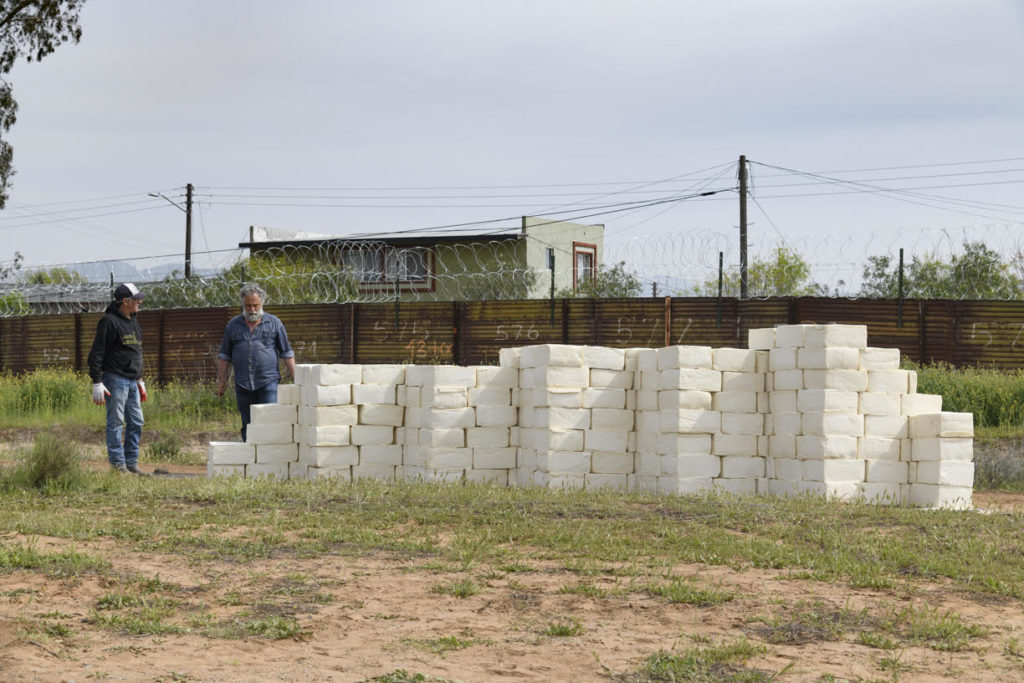
Cavallaro's project stands just several feet from a metal border fence, according to the Times.

The artist said he hopes the project shows people that they are better off without Trump's long-desired security measure.  

"It sounds cheesy, but just love one another," he said. 

How Katie Warner Johnson Went From Ballerina, to Wall Street Analyst, to Fitness Instructor, to Carbon38 Founder

After watching her body — once her only resource — "give out," she new she had to make a bold move.

In our long-running series "How I'm Making It," we talk to people making a living in the fashion and beauty industries about how they broke in and found success.

Last January, the multibrand women's activewear retailer, which also operates an in-house line, made headlines after Footlocker made a $15 million investment for a minority stake in the company (largely in the hopes of gaining insight into the women's activewear space). Its total funding to date is $40 million and sales have doubled each year for the past several years according to the company. With Footlocker's help, Carbon38's founder and CEO hopes that it too, could be come a multi-billion-dollar company.

Former ballerina, Broadway dancer, Wall Street analyst and fitness instructor Katie Warner Johnson started the company in Los Ange les 2013 alongside Caroline Gogolak, who has since left to head up retail at SoulCycle. Even after launching, Carbon38 went through several iterations before it became what it is today. Beyond functioning as an online retailer (with two physical stores — one in Bridgehampton and one in Pacific Palisades), Carbon38 also acts somewhat as an incubator, often helping the small brands it sells with production. 

The company also invests heavily in content creation, having operated an in-house photo studio from day one. "That was what got everyone excited to work with us, is they saw that we could put them on a map in a way that they couldn't themselves," says Warner. Recently, it's been engaging the fashion community through buzzy collaborations with the likes of Jonathan Simkhai, Carly Cushnie and Adam Selman.

When we meet at Carbon38's brand-new headquarters in Culver City — with amenities like kombucha on tap, floor-to-ceiling windows, multiple terraces with 360-degree views of LA and customized conference rooms named after gym components (pool, steam room, etc.), it is clear that Johnson hasn't forgotten her humble, and very different, beginnings, but also possesses a palpable dri ve to take her business to the next level. She's also passionate about lifting up other women in the process — whether that's stocking female-owned brands (which make up 75 percent of Carbon38's offering), helping her customers feel comfortable and confident in and out of the gym with a functional wardrobe, or assembling a roster of brand ambassadors, many of whom are fitness instructors just like she was when she became "obsessed with this customer."

Read on for our interview to learn how Johnson went from watching her body "give out" to becoming an entrepreneur; how she nabbed that $15 million investment from Footlocker; what she thinks is next for the activewear market, and more.

I started off as a ballet dancer, and I essentially grew up in Spandex. The leotard is the ultimate form of performance fashion. It's a very small piece of fabric that has to wick sweat, and it has to have beautiful lines, it has to move with your body, but ballet is an aesthetic art form. You have to look effortless and beautiful and well complemented and so this very small piece of fabric has to do a lot of things. I, at an early age, used to have my leotards made in New York, and I was very particular about how they were made.

Starting at a very early age— and maybe it's because I spent so much time in front of a mirror — I just kind of knew how I wanted things to fit. I remember, I had a key outfit that made me feel like 'Roman Holiday' [I wore] to and from rehearsal.

I went to college after an injury kind of sidetracked my career. I did a bunch of national tours of [Broadway] shows, took a job on Wall Street, found out pretty quickly that wasn't the place for me. I deferred my full-time offer to continue dancing in New York, and then that's where fitness kind of entered the scene. While I was dancing in New York to bridge the gap between a banker salary, pre-financial crisis, and a Broadway equity contract salary, I took up teaching fitness. 

Then 2008 hit, and these women who were in my class... a lot of them lost their jobs in the financial crisis. But they flooded my class. It was such an interesting thing where first I learned that fitness was recession-resistant, and I thought, this is a good industry to be in. 

A lot of these women had to start over in their careers and became entrepreneurs and founded businesses, and moved to new firms, and went from banking into private equity, and had to be creative, and I just fell in love with what felt like this new woman. Essentially that hour of sweating, you're actually training to be a leader.

So when did you really start thinking about starting your own business?

I had moved out to LA and I thought I would be dancing out here, and teaching fitness, and my body started to give out.

I was 27 years old. I had only ever used my body — it was my only kind of resource — and that really took the rug out from under me. It was scary. I was in a Tiffany-blue studio apartment with a Murphy bed and a green carpet, and I'm laying there with an ice pack on my back with my bank account overdrawn, and I was li ke, 'Oh, my God. I'm so ashamed, how could I have picked such a strange course for my life?' Then I was like, 'You know what? You've got to just take life by the horns, like those women in the financial crisis, and go figure out what's next.'

I applied to business school and was rejected from all of them, and I thought that by starting a business, I would have something to write about on my application essay. That's essentially what was the first impetus. 

A couple of my girlfriends, who were also kind of ready to leave their careers, and I got together, bought tickets to the Women 2.0 Startup Weekend in San Francisco. You pitch an idea, assemble a team, build a minimum viable product in 24 hours. I got up there and I pitched to this room of engineers about this amazing 'Yelp of fitness.' No one cared.

So we locked ourselves in a room and decided we would build it and pitch it, and none of us were engineers, and so we created these animated wire frames and pressed play, so that it looked like we were clicking through a demo — and we ended up winning.

[I was] like, 'This is so easy, I'm going to to do this forever.' Then we got into the whole accelerator community and we were turned away because we didn't have a technical cofounder. So we just kept iterating on ideas, and then finally, this one accelerator here in LA accepted our i dea. I think at that time we were bundling unsold inventory, and it was just really hard to make money because margins are low. And he was like, 'I don't see how you're going to make money on this, but I know my wife spends a lot of money with you. So why don't you take a step back and just study the customer again?'

We spent four months studying the customer and we launched a content platform, initially, in January 2013, where we would profile gym bags with influencers. I saw that our customers are really spending a lot of time on the activewear portion, and on top of it, we had assembled this really cool group of female-founded brands.

We were talking to them about their pain points, and there really was no distribution. They could maybe go to a mom-and-pop Pilates studio and sell a couple grand a quarter, and maybe they could get a consignment deal with an Equinox or two, but ultimately they were footing the bill and holding the inventory risk. And so, it was just really hard for these guys to scale.

So we thought, this is interesting. I've got two customers: this amazing woman who I've been training my whole life; and these brands that need help distributing. We're going to create a marketplace of sorts. We raised capital around that, and it was very helpful that Lululemon recalled 70 percent of their product offering, and then Chip Wilson had a bit of a PR mishap, and so the door was open for us.

We raised a little bit of capital, and then launched officially, Nov. 5, 2013. Thirty-five percent of our product offering is now our own brand, and we are really careful about not stepping on the toes of our vendors. We really want to support the brands and the designers that kind of helped us launched.

A look from Adam Selman Sport (ASS) x Carbon38.  Photo: Courtesy of Carbon38

More

How do you typically find brands and work with them?

Initially, we kind of had to run a campaign to convince people to work with us, but it actually wasn't that hard because a lot of these guys were smaller, and what we raised capital to do was to help finance their production. And at the time, in 2013, Nordstrom and Neiman's and all those guys weren't buying activewear. So essentially, I just needed cash to be able to help finance their production, which we essentially still do today.

The word on the street was like, these guys want to help, and then furthermore, our first investment in our own company was a camera and a light kit, and photography I knew was one of my most powerful communication tools. Content creation has always been in-house, and a really important part of how we help our brand show up online because I think we've gotten really good at not only e-comm photography, but also telling a story with phot ography.

You need to really help the user understand not only the product and the details around it, but also the brand and the story behind it, and that was what got everyone excited to work with us, is they saw that we could put them on a map in a way that they couldn't themselves. In a way, we're almost like a marketing/branding agency.

With designer collaborations, how do those typically come about and what kinds of synergies do you look for?

Our first designer collab was with Jonathan Simkhai and he has such a bodycon aesthetic and uses athletic materials in a lot of his designs. It felt like there was a symbiosis that we could tap into. I really believed that what we're creating at Carbon is not just for the hour in the gy m. It's really this next generation of getting dressed. I think the brands that we're working with today are going to take the place of Alex Wang and James Perse and Vince: all those easy-to-wear brands out there. By partnering with designers, it helped legitimize us as something that you can wear beyond the gym.

What was your first big business milestone or moment where you felt like you'd succeeded?

The first day in all honesty, we went live, and I was so stressed that we went down the street, split a bottle of wine and tried to calm our nerves, and came back to four orders. Four orders from people I didn't know: They weren't my mother, I can assure you that. It was like, okay, someone cares. 

I think closing our first million [in sales] was big, because at that point, I definitely couldn't go to business school. Because I'm still thinking, like, this would be so great on my essay, and then when we got a million bucks in the bank from a bunch of people that were counting on us to give them a return, I couldn't be like, oh, thanks guys, I'm out. It was like, this is real, and this has to work.

And then came that $15 million investment from Footlocker. How did that come about and how have you benefited from that partnership?

It's been actually a really cool, organic relationship. So I think it was [CEO] Dick Johnson who called me in 2014, and he was like, 'I don't really know what this is, but we've got this women's business called SIX:02 and maybe there's a partnership there, whether you can come in and run it, or whatever,' and I thought, no, I'm into my own business right now, but let's stay in touch because I think there's some interesting syne rgies.

They're huge: $8 billion-plus annual revenue, $2 billion to the bottom line. They know how to run a wonderfully profitable business across 3,600 stores, and so, I just thought, I have a very different brand. I have a very different perspective because we're digital and women's, which they're definitely more of a men's business, but they know a lot of stuff that would be helpful to me, and potentially, we could learn from each other.

When I met Lauren Peters, their CFO, we just kind of started talking. It was wonderful to have a woman sitting across the table. It's someone I wanted to swim next to and learn from.

We went out for our Series A [funding round], they asked to participate in the process, and when they put down a term sheet, it just showed the partnership that they really wanted to build with us, and it made a lot of sense, and it felt a little scary because for a company of our size and age taking on strategic [investment] can be limiting, but they made sure that it wasn't — that we are going to go out in our next round and find another partner outside of Footlocker that can help diversify thought and they're going to help us do that. We have almost a buddy system now with our company, where our executives and our team members are connecting with the matching team members on their side to help with best practices, bouncing ideas.

It allows us as a team to set our sights much higher than we ever would've. And they know how to build multiple multibillion-dollar companies and so, they're like, 'Oh, yeah. Here's the playbook.'

A look from Carbon38's private label.  Photo: Courtesy of Carbon38

More

What are the biggest ways in which your role has changed as the company has grown and you've grown the team?

I've been through three phases of leadership. Phase one is you're doing everything, but more importantly as a leader, you're like the razzle-dazzle entertainer. You're telling everyone how great they're doing all the time, just trying to be this magnetic personality that people will sign up to do work [for]. They're getting paid very little, and you need them to keep coming back, and just be drinking that Kool-Aid and living the dream . 

Phase two was a hard phase for me, where you suddenly have reached a bit of critical mass, where you know you've got a business that you have to scale. We have to start putting operational structure in place. We had taken on a significant amount of investment for our size; we took on $11 million in our first round, and suddenly it was like , we had to deliver and it was hard. I really had to dig in, in a way, and sort of find this ferocity in myself that I never had recognized before. Maybe I had it when I was dancing, it was kind of primal.

And now, in phase three, it's all about scaling. I feel like it's all about communication, strategy and vision, and that cannot be underestimated. Its about financial performance, knowing our numbers inside and out, knowing where our levers need to pull and making sure we're delivering, and making sure we have cash in the bank and raising capital from the right partners.

What was the most challenging part of growing your business?

It's all hard. Those three phases were hard. And just now looking back at the five years, and what was accomplished, and what we're signing ourselves up for, I know I can do it because I've been through some dark days and hard times. 

There's a lot of talk of the activewear/athleisure space being too crowded — is there more market share to capture?

We're carrying pieces that support an active lifestyle that may not be worn to sweat in, but is a beautiful dress that is in wrinkle-free fabric that you can pack in a suitcase really easily, or a pair of neoprene culottes that you can wear on a red-eye and hop out the other side; you put on a pair of heels and you're ready for a business meeting. She's getting her yoga wear, she's getting her airplane wear, she's getting the stuff that she's going to wear on this vacation and make it easy.

I think that is allowing us to take on a much larger segment of the fashion market. I feel like athleisure is a dirty word because we're not doing anything leisurely when we're wearing this stuff, and we as women have to give ourselves more credit. We're not just popping on our Juicy Couture jumpsuit and going in the mall. We're killing it at life. I do think removing the leisure part is really important in this rebrand, as we go forward.

This interview has been edited and condensed for clarity.

Never miss the latest fashion industry news. Sign up for the Fashionista daily newsletter. 

This Artist Is Building a Wall of Cotija Cheese at the Mexican Border to ‘Make America Grate Again’

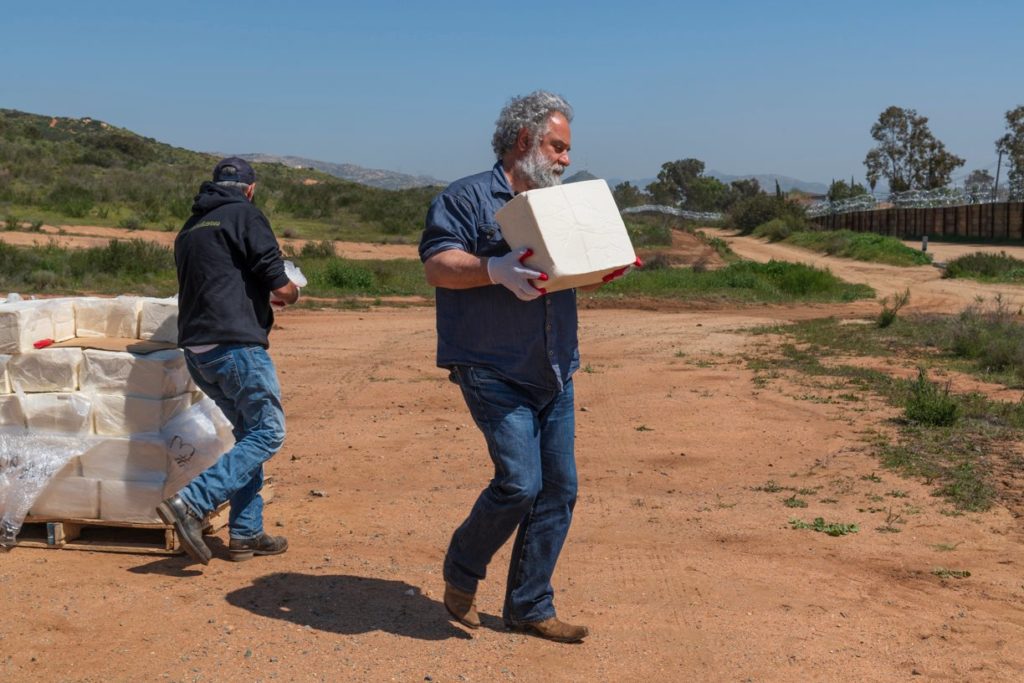
Artist Cosimo Cavallaro is helping President Donald Trump build his controversial border wall between the US and Mexico—but his barrier is constructed not from steel and concrete, but from blocks of cotija cheese.

"I don't like walls," said the immigrant artist in a video promoting the project. "This is a wall that I'm willing to live with. Because this wall is a perishable—it will not last."

Construction on Cavallaro's six-foot-tall and three-foot-wide border wall began on Monday in Tecate, California, just 45 feet from the actual fence on the border with Tecate, Mexico, reported HuffPost. He's hoping to highlight the absurdity of building a real wall at such a massive expense, but the Cheese Wall's message isn't as much political as it is an admonition against letting fear and hatred divide us from our fellow man.

"It sounds cheesy, but just love one another," Cavallaro told the Los Angeles Times.

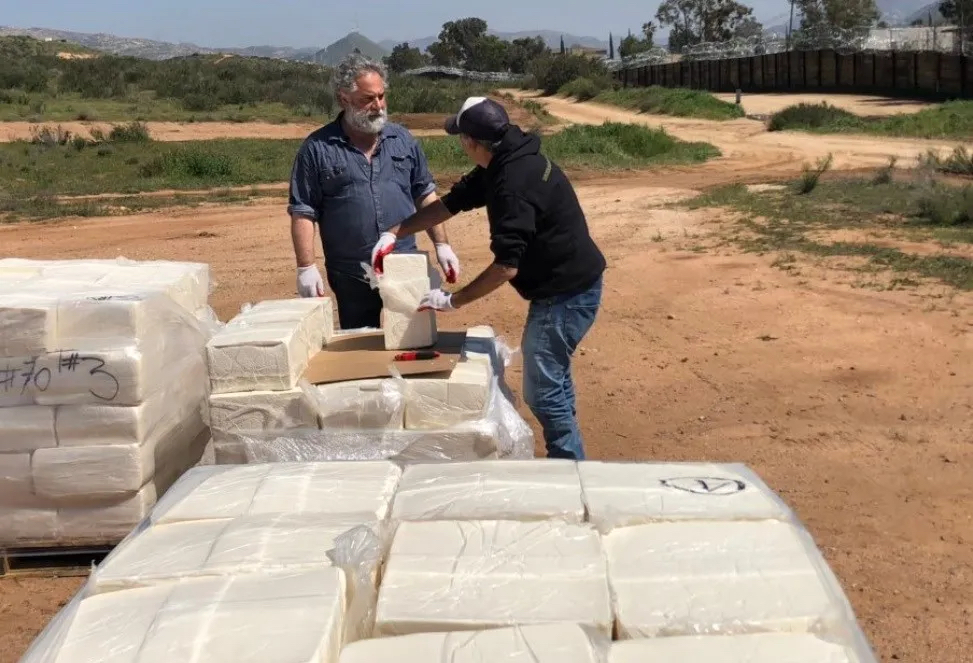
To fund the project, Cavallaro is running a GoFundMe campaign and selling "Make America Grate Again" merchandise. Each brick of cotija costs $100. Several producers of the hard, crumbly cow's milk cheese, which originates in the Mexican state of Michoacán, are saving expired blocks for the artist to use.

This isn't the first time Cavallaro has used food in his art. For previous projects he made a life-size chocolate Jesus sculpture and once covered rooms in melted mozzarella and splattered ketchup.

So far, Cavallaro has 200 blocks of cotija, but his ultimate goal is to build a 1,000-foot-wall along a quarter-mile stretch of land that he's leased for the year—a feat that will require 9,000 blocks of cheese. As of publication time, Cavallaro has only raised $1,435 of his $300,000 goal. Readers can follow the project on the artist's Facebook page, Art Above Ground, or on the Cheese Wall website.

"This wall is a documentation of our times," said Cavallaro on GoFundMe, noting that by giving, "you're actually a participant in making a work of art. I'm asking you the people: make this yours."

See more photos of the Cheese Wall below.

Cosimo Cavallaro is building a wall of cotija cheese along the US Mexico border. Photo by Alan Schaffer, courtesy of the artist and Sarah Cavallaro.

Cosimo Cavallaro is building a wall of cotija cheese along the US-Mexico border. Photo by Alan Schaffer, courtesy of the artist and Sarah Cavallaro.

Cosimo Cavallaro is building a wall of cotija cheese along the US Mexico border. Photo by Alan Schaffer, courtesy of the artist and Sarah Cavallaro.

Cosimo Cavallaro building his wall of cheese. Photo by Alan Schaffer, courtesy of the artist and Sarah Cavallaro.

Cosimo Cavallaro building his wall of cheese. Photo by Alan Schaffer, courtesy of the artist and Sarah Cavallaro.

Cosimo Cavallaro is building a wall of cotija cheese along the US Mexico border. Photo by Alan Schaffer, courtesy of the artist and Sarah Cavallaro.

Cosimo Cavallaro building his wall of cheese. Photo by Alan Schaffer, courtesy of the artist and Sarah Cavallaro.

Cosimo Cavallaro is building a wall of cotija cheese along the US Mexico border. Photo by Alan Schaffer, courtesy of the artist and Sarah Cavallaro.

Cosimo Cavallaro building his wall of cheese. Photo by Alan Schaffer, courtesy of the artist and Sarah Cavallaro.

Follow artnet News on Facebook:Want to stay ahead of the art world? Subscribe to our newsletter to get the breaking news, eye-opening interviews, and incisive critical takes that drive the conversation forward.

How the plan to launder wall funding through the Pentagon hurts the military

On March 25, Acting Secretary of Defense Pat Shanahan notified Congress that he would redirect $1 billion in funding for military pay to build a 57-mile portion of the border wall. This laundering of border wall funding through the defense budget negatively impacts immediate military readiness. It could also result in Congress eliminating the very discretion the President is now using to the long-term detriment of the Pentagon and the military's ability to manage its budget in a sound and prudent way.

New bollard-style US-Mexico border fencing is seen in Santa Teresa, New Mexico, US, March 5, 2019. Reuters/Lucy Nicholson

The Pentagon is following the direction of the White House, which announced that it would use Section 284 Pentagon counterdrug authority to fund portions of the wall before it begins to pilfer military construction projects under Section 2808 and the emergency declaration. Because the Section 284 counterdrug account is currently almost empty, the White House directed the Pentagon to find money elsewhere in the military budget to fill the account.

Secretary Shanahan found this money and redirected it using "reprogramming authority," a process that affords the Pentagon crucial financial flexibility in a fast-paced threat environment. Under this process, the military sends reprogramming requests to Capitol Hill stating why it needs to move funds from unexpectedly lower-priority programs to unexpectedly higher-priority programs. For instance, last year, the Pentagon redirected $18 million from programs with testing delays to buy spare parts for Marine Corps RQ-21 Blackjack drones because they'd been used more frequently than expected in Iraq and Syria. Reprogramming requests normally redirect less than one percent of defense funding in any one given year, but they are the military's primary tool to adjust to changing threats and circumstances. By longstanding bipartisan custom, all reprogramming requests above a minuscule threshold require approval from the chairmen and ranking members of the Appropriations and Armed S ervices committees in both the House and the Senate — eight total members of Congress. Any one member can nix a request. But for the first time ever, the Pentagon will reprogram this $1 billion without asking Congress for sign-off.

The $1 billion of military pay being used is "unexpectedly lower-priority" because the Army failed to meet its recruiting target by about 9,500 soldiers, so the money originally budgeted isn't needed to pay them. These sorts of hiccups occur every year: recruiting is slow, weapons programs experience testing or development delays, combat operations drop fewer bombs than expected. But this money does not go unused. Normally, the military would send a reprogramming request asking Congress to use the money to address emerging urgent needs. Failing that, the appropriations committees rescind money and use it on what they view as high-priority programs. A favorite of Congress — and what this $1 billion might likely have been spent on — is using unneeded funds to buy new equipment for National Guard and Reserve units they perceive as perennially underfunded by the Pentagon.

There's plenty of high-profile immediate military needs this $1 billion of funding could meet. Just last week, Marine Corps Commandant Gen. Robert Neller sent a memo to Shanahan indicating that the Corps faces "fiscal challenges without precedent" and will have to cancel major training exercises to pay immediate bills for repairing Camp Lejeune's hurricane damage and supporting border operations. In a normal year, the $1 billion in "unused" money would be quickly moved to pay unanticipated bills like those the Marine Corps faces. The Air Force faces similar bills for hurricane damage to Tyndall Air Force Base and flooding damage to Offutt Air Force Base. Beyond hurricane damage, the military just sent Congress a $10 billion list of high-priority unfunded projects that this $1 billion in "unused" military pay funding could be used for. The Pentagon's reprogramming of at least $1 billion—and possibly another $1.5 billion—creates massive immediate financial unce rtainty that detracts from the military's ability to respond to emerging threats.

Those immediate effects pale in comparison to the long-term military consequences of this unprecedented unilateral reprogramming request. By breaking the longstanding agreement with Congress that enables this flexible authority, the White House risks the permanent loss of military reprogramming authority. Congress cannot prevent this current redirection of funds. But already, congressional Democrats have indicated their objection and intent to strip this authority from the Pentagon in the upcoming 2020 budget fight. From their perspective, allowing the Pentagon to continue reprogramming military funding for the border would amount to funding new portions of the wall beyond what they've approved, a policy issue undergirded by core questions about the power of the purse. This is no small matter, and many Republicans may end up agreeing. As Senate Armed Services Committee Ranking Member Jack Reed noted, "We're setting up for a constitutional issue of significant importance."< /p>

While the White House's plan to use military construction funding to build the wall has garnered the most attention so far, this unprecedented unilateral reprogramming request could prove even more damaging to the military both immediately and in the long run. By simultaneously laundering wall money through the military and ignoring Congress in the process, the White House has placed the entire defense budget in jeopardy at a time when the military stands to lose hundreds of billions of dollars over the next two years.

There are no comments available.