quarta-feira, 1 de maio de 2019

Wall Street Left This Stock for Dead – It's About to Make a 122% Comeback

Any stock market downturn can be a prime opportunity for savvy investors. That's what Money Morning Chief Investment Strategist Keith Fitz-Gerald has been telling readers for over a decade.

The same is often true for individual stocks when they get hammered. Even if the price drop is due to valid concerns, the market can overreact and push the price far below its fair value.

That's the case for our stock to buy today, which has been hit hard this year: It's down 33% over the last 12 months.

But the company's revenue and earnings are on the rebound. And the market hasn't caught on to how much value it left on the table.

That's why it just got a top score from our Money Morning Stock VQScore™ system.

In fact, this pick is the No. 3-rated stock in our whole system.

Brace Yourself: The 5G revolution is unleashing your next potential TRILLION-DOLLAR opportunity – go here now.

That's what happens when a company sees its own adversity as an opportunity to streamline operations and focus on new growth opportunities.

Our pick today has done just that. And the board clearly knows that the stock is undervalued: It just launched a $25 million buyback program in March.

It won't be long before the rest of the market catches on. So you'll want to get your shares soon.

Join the conversation. Click here to jump to comments…

terça-feira, 30 de abril de 2019

Main Street To Wall Street: How This Advisor's Border-Town Upbringing Helped Build Her $500M Practice

Jane Rojas. Courtesy of Michael Chansley Photography

"Nogales, Arizona, is as far away from New York City as you can get, it seems," says wealth advisor Jane Rojas, who's built a $503 million Tucson advisory practice near the mountainous border town where she grew up.

"My clients are winning in a very complicated world, but they shouldn't have to deal with an advisor who doesn't speak their language, who doesn't speak their lifestyle," the Morgan Stanley advisor continues. "So that's my job: bringing very sophisticated analysis, products and services from New York City to my clients in Nogales—from Wall Street to Main Street."

Rojas' family, which moved to Nogales from Tuscon when Jane was in first grade, has firmly rooted itself in the largely Spanish-speaking community of about 20,000, a hot spot for international trade that moves billions of dollars in goods and fresh produce across the border annually.

Rojas, who's one of Forbes' Top Women Advisors, now thrives by serving the financial needs of her diverse clientele—from women seeking financial guidance to small business owners and entrepreneurs to Latinos in search of bilingual investment expertise.

And having previously served as national chair of Morgan Stanley's diversity council for three years, Rojas champions for diversity in the field.

"If you look at the average FA today, he's 58 years old, white, male. Only 15% of FAs out in the field are women," says Rojas, 62, at a recent Makers conference. "That needs to change—because our client demographics and the communities we come from don't look like that."

Growing up, Rojas spent over a decade working at her family's small hardware store a block from the Mexican border. With a Spanish-speaking father and a Chilean-born mother, Rojas says the ten years helped fine tune her "retail-hardware Spanish"—not quite the "financial advising Spanish" she's since mastered, but the language was a key first step in her 37-year career.

The niche Nogales market, rich in trade and small business, was a tough one to tap into for those unfamiliar with the community. But in 1982, Rojas had both the lay of the land and M.B.A. training that piqued the interest of her family's financial advisor, who also happened to be a regular at their shop. The advisor, who owned a small practice in Tucson, lived in Nogales and envisioned an expansion of his business into the region.

"He'd realized that Nogales, Arizona was going to be a market that he just couldn't really get into, and so he wanted somebody who was from there, who was bilingual, bicultural," Rojas says. "He'd come into the store and say, 'Okay kid, when you're ready, come work for me, and we'll do this together, and it'll be wonderful'... It wasn't my plan, but it just worked out."

Rojas started as a client service associate and receptionist at her family's advisor's firm, opting to learn the business from the inside rather than through a training program, and she quickly moved up to junior partner.

Today she leads a four-person team as senior vice president at Morgan Stanley's The Rojas Group, which counts about 300 families as clients. A product of its Nogales roots, the advisory does a lot of cash management for area business owners, helping with liquidity needs and the flow of business.

For a while, Rojas and her cousin operated a cross-border advisory that they'd formed as a joint partnership. Her cousin did business from the nearby Mexican city of Hermosillo, and Rojas remained in the U.S. Their clients included produce farmers such as tomato growers in Mexico who sold their goods all over the U.S. Her cousin eventually moved and joined a different firm, but Rojas stayed on, now doing business primarily on the domestic side.

Over the decades, Rojas says, during her day-to-day conversations about goals-based investing and retirement planning, she's found herself increasingly encouraging clients to not shy away from making "joyful" decisions as they get older.

"A lot of my original clients really worked hard and were very careful in accumulating their wealth, and there's sometimes guilt about spending it," she says. "But you have to step away and look at life: You worked all of your life to accumulate this, you've built so much wealth for your children, now go and enjoy it too—appreciate it, but enjoy it.'"

About advising, Rojas emphasizes its massive influence, mainly in providing expertise that the average person doesn't have: "It's hugely impactful today, and for generations to come, and the weight of that should be very heavy to advisors." It's a wonderful opportunity, she adds, and it's one she hopes can lure in younger advisors.

As for her own future, Rojas has welcomed her daughter, Selina Rojas, to the team as a junior partner. The younger Rojas joined Morgan Stanley seven years ago as a junior service associate out of California before moving to her mother's practice in 2014.

"I've been in this business so long, and I'm always thinking numbers, jumping ahead and thinking solutions," Rojas says. "And she listens differently than I do," she says of her daughter. "She's tough on me and, having a different set of eyes and ears in meetings and also looking at the practice, it's really moved us forward."

Tips From Wall Street Trader Lauren Simmons on How to Succeed

At 23, Lauren Simmons made her mark on history — literally and figuratively. She signed her name into the leather-bound tome containing the constitution of the New York Stock Exchange, becoming the youngest and only…

At 23, Lauren Simmons made her mark on history — literally and figuratively. She signed her name into the leather-bound tome containing the constitution of the New York Stock Exchange, becoming the youngest and only female trader at the NYSE at the time. But this wasn't all Simmons became that day.

As she stepped back from the marble-topped table after adding her name to a list containing the likes of Rockefeller and Vanderbilt, the NYSE archivist stepped forward. Simmons, the archivist said, was the second-ever African American woman to sign her name to the book. In the 226-year history of the NYSE, there had been only one other African American woman trader.

Suddenly Simmons' accomplishment felt as bitter as it was sweet.

"I was very excited, but also disappointed that in 226 years, I was only the second," she says.

It's a title that's come to define her. Even now that she has left the trading floor, being the second-ever African American woman to break the white ceiling of the NYSE has turned her into an icon.

Her story was picked up by major news agencies around the globe. She's been on a speaking tour that kicked off in Beijing since December. AGC studios is turning her story into a movie (Kiersey Clemons to play Simmons) and she's writing a book. Release dates for both to be determined.

"It gets a little weird when I'm walking the streets of New York and people stop me to take pictures. I don't know if that'll ever be normal," she says. But "the story, as much as it's about me, I tell people I'm not an anomaly. I don't want to be."

[See: Infographic: Investing Barriers Women Face.]

Being a minority at the NYSE. A NYSE stock trader manages client orders for stocks listed on the exchange. When a client says they want to buy shares of Apple (ticker: AAPL) for $200 or less per share, the trader will aim to fill that request, if possible. They're the eyes and ears for their clients on the trading floor. A client might ask them to "look" into the price of a stock, which can mean getting an estimate of the opening price or information on who's buying and selling. It's a high-pressure, analytical, fast-paced job and one few thought Simmons could do. But then, she's no stranger to adversity.

From studying engineering in high school to becoming a genetics major in college and then a full-time stock trader, Simmons has often been faced with disbelievers. People would tell her there's no way she could do well in these courses or that profession. She'd never pass the Series 19, the NYSE member exam to become a licensed stock trader. She should try something else; something less ambitious. But that wasn't the Lauren Simmons way.

"I've always been in environments where I want to prove people wrong," she says. "I didn't want to be 'woe is me' or have excuses for why I couldn't do things."

It's a mentality she recommends everyone adopt. "When you let your limiting beliefs come to the forefront, you limit yourself from greatness," she says. "People can see if you're a woman, or Latino or black, but no one knows what your baggage is and because of that you can just be you."

When she started on the trading floor, she didn't think of herself as being different than her peers. "I didn't realize I was the only woman in the room," she says. "We have female news anchors on the trading floor and females who work for the actual ICE (Intercontinental Exchange) that is over the NYSE. It wasn't anything that I was the only female trader. I went there to do a job. I wanted to be great at my job."

Bringing diversity to the financial industry. Diversity is a hot topic and a cool word to throw around, she says, but we have to truly want it for diversity to become a reality. And we have to take ownership for our part in its creation or lack thereof.

Even after her story came out, when a job opening was posted for a floor trader, not one minority applied for the position, she says.

"People need to be comfortable in uncomfortable situations," she says. "If you're applying for the job and you think you might be 'the other,' that's OK, because a company that wants you to do well will go out of its way to help you."And if it doesn't, there's another one that will.

For all it's white-male partisanship — "nepotism is really a thing," Simmons says — the trading floor can be a great place for a woman or minority to start her career in financial services. Not only was it a perhaps-surprisingly warm and inviting place, but it also taught her about accountability and how to present herself within a crowd.

As a stock trader, you're accountable for any decision you make, she says. And those decisions — which happen in microseconds — can have multi-million dollar consequences. "It's kind of a joke that you don't become a trader until you make a multi-million dollar error," she says.

She recalls making her first $3 million mistake. It was about a year-and-a-half after she started and near close on a Friday. "I remember my boss saying go home, don't think about it," she says, which was of course nerve-wracking. How could she not think about it? But there was nothing she could do until 9 a.m. on Monday when the markets re-opened.

So she spent the weekend doing "things for Lauren." Then, come Monday morning, she set about correcting her error. It ended up being only a $2,000 error, but the misstep taught her a lot about accountability — and work-life balance.

[See: 10 Investing Tips for Busy People.]

The financial industry is not known for a healthy work-life balance, but this, Simmons says, is another reason the trading floor can be a great place to get your indoctrination. You hear "horror stories" from other financial professionals, especially those in investment banking or private equity, but on the trading floor, "at four o'clock, when the closing bell sounded, it was the end of the day," she says. Work couldn't follow you home if you wanted it to.

Working in an all-male environment also taught her how to command an audience. "I think white men in particular have a way that they come across to an audience," she says. "This confidence, this knowledge, how presentation is everything. And I got to experience that hands-on because I was 'the other' in the room."

How to succeed as a woman in finance. It's never easy being the odd woman out. The financial industry may be built by men for men, but that doesn't mean women can't be a part of it, too. You just need to be smart about it.

"The reality is that a lot of these negotiations in finance are built on relationships," Simmons says. "Going out for drinks with coworkers is a thing. Golf is a thing." And as much as you'll probably be the only woman doing this thing, she says to still go grab that drink or swing the club with boys — but do it with tact.

"It's a double standard for women," she says. You're expected to keep up with the boys but not be "that girl" who got sloppy drunk going shot-for-shot at happy hour.

Simmons told bartenders to fill her shots with water. While her colleagues thought she was taking nine shots of tequila, she was hydrating. It may seem an extreme charade to play, but "that's how those relationships are built," she says. And they'll be built with or without you.

"You can't play the game if you're not in the game," she says. "If you want to have a seat at the table, you have to be strategic."

[See: 11 Great Investing Tips for Women]

Be financially savvy. If Simmons could leave you with any message, it'd be this: "Be financially savvy. Whatever that looks like for you. Women have been balancing the books since the beginning of time; there's no reason why they shouldn't have their hands in the pot when it comes to investing or even going into the financial industry."

More from U.S. News

7 Great Blogs for Investing Tips

Investment Advice for Women in Transition

The Single Woman's Investment Guide

Tips From Wall Street Trader Lauren Simmons on How to Succeed originally appeared on usnews.com

How to choose the right shade of wellness-studio white paint for your walls

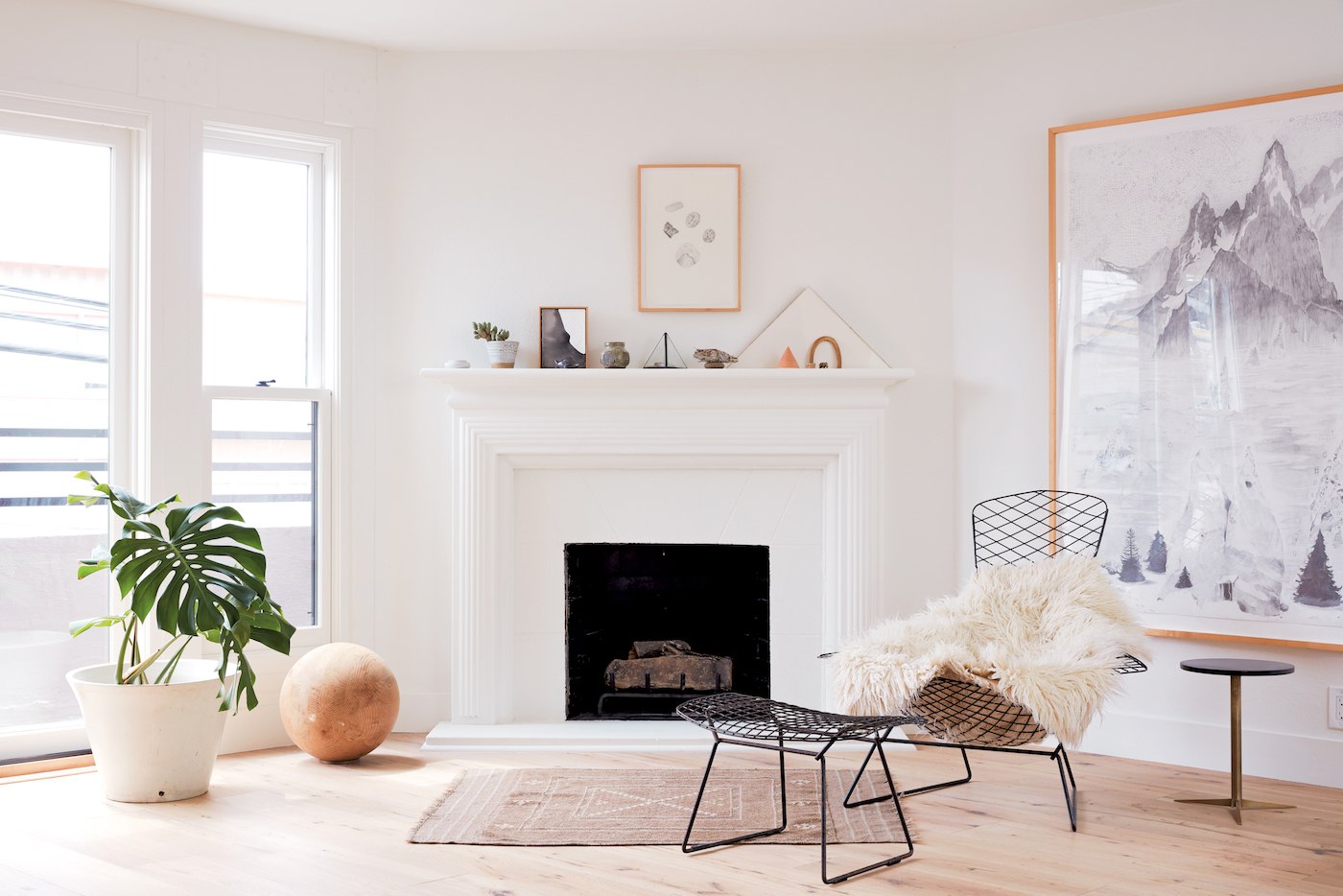
In my never-ending quest to chill the eff out, I'm forever trying to make my tiny home feel a little more like my favorite wellness spaces—think pothos plants by every window, faux sheepskins draped over the chairs, and as many cream-colored elements as possible, from the sofa to the shelving to the walls. (Yes, I have pets, which means I basically keep the stain remover and lint roller markets afloat.)

White walls are especially key to this aesthetic, IMO. When executed correctly, they can make an entire space feel brighter, more open, and more tranquil. But it's definitely possible to do them the wrong way, as I discovered at a house I lived in a few years ago. Initially, I was drawn in by the sharp contrast between the ultra-white walls and the dark hardwood floors, but once I moved in and had mirrors installed, I realized the shade of white was way too bright—like, it made me look as washed-out as a Victorian-era child with cholera.

So when I started thinking about painting my current kitchen cabinets to match my oat milk, I turned to Serena Mitnik-Miller and Mason St. Peter, co-founders of the General Store lifestyle boutiques in San Francisco and Los Angeles. As evidenced in their new book, Abode: Thoughtful Living With Less, clean white surfaces are an integral part of their design signature, along with natural materials, vintage furnishings, and hand-made curios.

"Serena's unofficial mantra is: The only option is white," the duo writes in Abode. "That's not to say we don't appreciate color…but we want to draw attention to the whole, not a part, and a cohesive neutral palette helps us achieve this." And while you might think this approach makes things easier, that's not exactly true. "Choosing the precise shade [of white paint] is a master skill in its own right," write Mitnik-Miller and St. Peter—and that's just step one.

Here, the designers share the dos and don'ts of choosing white paint colors for your space—because honestly, who doesn't want to feel like they're on a Tulum spa vacay, every day?

white paint colorsPhoto: Mariko Reed; From Abode by Serena Mitnik-Miller and Mason St. Peter, published by Abrams Books c 2019.Do consider the type of surface you're painting

Getting that alabaster look isn't as simple as buying one can of paint and going to town with the roller. "We prefer to keep it monochrome, but we do use different finishes depending on the surface," says Mitnik-Miller. "There are paints for all different jobs. Wall and ceiling paint are different from paint for floors, bricks, blocks, or rocks."

In general, Mitnik-Miller and St. Peter opt for a flat finish for walls and a semigloss finish for textured surfaces like doors, cabinets, and trim. A satin or semigloss finish is also recommended for kitchens and bathrooms, as it can withstand a little scrubbing—you know, when you inevitably end up splattering some smoothie or mud mask on the walls.

Don't choose different white paint colors for different rooms or architectural elements

While Mitnik-Miller and St. Peter often use different paint finishes in different parts of a space, they generally stick with the same shade of white throughout. This isn't always the norm—some painters prefer to switch it up based on the light conditions in different rooms or the materials they're painting over—but the duo claim that by doing this, you lose that calming, monochromatic effect. Their favorite multipurpose white paint colors are Swiss Coffee by Behr (creamy white with a soft yellow undertone) and Super White by Benjamin Moore (described as a "brilliant, almost sparkling" shade.)

Do test the paint in your space

No matter which shade you're drawn to, it's bound to look a lot different in your home than it does in the hardware store. That's why Mitnik-Miller and St. Peter recommend testing it out on a sizable piece of the surface you want to paint—a few square feet, at least—and living with it for a few days, checking how it looks in different light conditions. "Understanding your lighting and exposure to sunlight can help increase your chance for success," says Mitnik-Miller. "Some whites can look green or blue or pink in certain lights—test areas first!" If you're deciding between a few different shades, the pair recommend swatching them side-by-side to compare.

Don't be afraid of floor-to-ceiling white

For a supremely Zenned-out effect, Mitnik-Miller and St. Peter encourage you to look beyond the walls in your space and paint other architectural elements white as well—think floors, fireplaces, built-in cabinets, ceilings, the works. If you're an inexperienced painter and you want to go this route, however, they recommend getting professional help with it. After all, it's not as easy to reverse the effects of painting, say, your hardwood floors or brick fireplace as it would be to paint over a wall. And again, you'll want to seek out paint that's specifically designed for those types of surfaces, which is where expert guidance can be helpful.

Do prep your space thoroughly

A few more tricks of the trade, per Mitnik-Miller: Be sure you're prepared with all the essentials before you start—drop cloths for the floors, tape for edges, clean brushes for detail work and rollers for large areas, and wet washcloths for wiping up drips—and primer. "Not considering the surface that the paint is going to be applied to is the most common misstep in the process of paint application," she says. "Primer is key!" Choose a primer specific to the material you're painting over, and you'll have the best chance of your room turning out like all the ones you've favorited on Instagram.

Peel-and-stick wallpaper is another hot home trend—here are 9 designs to buy right now. Then, finish off your sanctuary with a few pieces from Ikea's new self-care collection. 

segunda-feira, 29 de abril de 2019

DIY Demo Days: Learn How to Build Your Own Patio, Pond and Retaining Wall

Thinking about upgrading your backyard this summer? Attend Do It Yourself Demo Days at Custom Retaining Walls and Landscaping, Inc. Every year, their professional landscapers put on live demonstrations for three different DIY projects: a patio, a retaining wall and a pond.

“We’ll take you step-by-step from a blank slate to a beautiful and functional finished product,” says manager and landscape designer, Lori Reiland. It’s a great opportunity to learn everything you need to know and see exactly how to transform your backyard just in time for summer.

Event Details

Demo Days take place Saturday, May 11 and Saturday, June 1 at Custom Retaining Walls and Landscaping, Inc., located at 2375 Sleeper Lane NE in Rochester, MN 55906. The events are free to attend, and everyone is welcome â€" no prior knowledge or experience is required. Just show up ready to learn, says Reiland.

The schedule is as follows:

May 11

  • DIY Build a Retaining Wall Demo: 9:00 a.m. â€" 10:30 a.m.
  • DIY Build a Water Feature Demo: 11:00 a.m. â€" 12:30 p.m.
  • DIY Build a Patio Demo: 1:00 p.m. â€" 2:30 p.m.
  • June 1

  • DIY Build a Retaining Wall Demo: 9:00 a.m. â€" 10:30 a.m.
  • DIY Build a Patio Demo: 11:00 a.m. â€" 12:30 p.m.
  • Guests are welcome to attend any demo of their choice, or stay for all three. “A lot of people like to stay and enjoy the day. Even if they’re not working on a particular project right now, it might be something they want to revisit in the future,” adds Reiland. Lunch will also be served at 11:00 on both days.

    Throughout the event, you’ll have the chance to ask questions and talk with an experienced team member about how these techniques and materials might apply to your own backyard. With over 30 years of experience, the team at Custom Retaining Walls and Landscaping, Inc. is highly knowledgeable and ready to help. This allows attendees to not only see the project unfold live, but to get tips from the pros themselves to make the process that much easier. “If you have a large-scale project or one that requires extensive engineering,” Reiland suggests, “it might be a good idea to have a professional help you figure out the plans and timeline.”

    Shop for Supplies and Talk to the Pros

    A Customer Appreciation Sale will also be held on the same day. Custom Retaining Walls is the largest landscape center in our area. They have a vast selection of decorative rock and mulch to choose from. They also carry edging, natural stone, landscape fabric, pond supplies, pergolas, trees, shrubs, flowers and more.

    Not ready to build a patio, pond or retaining wall? The staff is happy to assist with other projects, too. Reiland says, “We’re open! We always have someone here to help with all types of DIY landscaping projects.” Stop in today!

    Attend the 2019 Demo Days

    Interested in coming to Do It Yourself Demo Days? No RSVP required. Just come as you are. If you have any questions or would like to learn more, call Custom Retaining Walls and Landscaping, Inc. at

    507-281-0669. You can also visit them online to see photos from last year’s Demo Days and to discover everything they have to offer.

    quinta-feira, 25 de abril de 2019

    To build the wall, or not to build? On the Texas border, residents take sides

    Diana Uribe points to the door of a stone outhouse beside the old Spanish fort at San Ygnacio, Texas, built in 1830. "My great-great-great-great-great-grandfather and his bride lived there," she says. In those days, Mexico was trying to stop US immigration here into Tejas – as Texas was then called – to no avail.

    A slope leads from the street outside down to the slow-rolling Rio Grande, across which you could throw a baseball into the foliage and palms of what is now Tamaulipas, Mexico.

    It's a lazy day in San Ygnacio, population 700: grackles swooping and sun beating down on the empty plaza where Marlon Brando once filmed a scene for Viva Zapata; little else. But through here, according to a "national emergency" Donald Trump has declared, a new border wall must cut.

    Uribe – now 63, a retired teacher – grew up in this village, as did her forebears, watching names change and borders drawn: granted land in New Spain under royal charter from Madrid, then Mexico, then the Texas Republic, then the USA after 1848.

    "This place isn't as sleepy as it looks," says Uribe. "It's on a direct highway, if you know the land – which the smugglers do." Yet even so: "I don't feel unsafe here. The last thing they want is to draw attention to themselves on the border. We just don't need a wall. Do we want security? Yes. Do we want or need a wall? No."

    But even that is not the point. Uribe explains how the man who built this fort, Don Jesús Treviño, had three daughters, one of whom married Blas María Uribe, from the town of Guerrero across the river in Mexico. Diana is of that line, "and I am being told I have to be cut off from my family and people on the other side of a frontier drawn since they arrived.

    "We used to go to Mexico for weddings, dances," she says, "and clubbing in Nuevo Laredo, though my parents didn't know that bit. The wall cuts across all those generations and traditions. And also through the realities of border economics, the complete inter-dependency of twin communities all along the Rio Grande."

    Outside the Treviño-Uribe Rancho, a 19th-century Spanish fort complex in the sleepy Texas border town of San Ygnacio, Texas. Photograph: Bryan Schutmaat/The New York Times/eyevine

    The fort in San Ygnacio had been entered on America's National Register of Historic Buildings in 1973, but was still a ruin when, five years later, the celebrated artist Michael Tracy moved here, incrementally, bought it and undertook its restoration.

    Sitting in his cactus and agave garden, Tracy recalls how the fort was actually built to defend against Comanche Indians "by those trespassing on Native American land. To be honest, though I have done all this to bring a fortress back to former glory, I think you must either identify being inside the wall or outside the wall. I am outside the wall."

    The president's wall "is mythic", says Tracy, "it's meaningless. Yes, there's always the possibility here that someone could come to your door at four in the morning and demand all you have. But will Trump's wall stop them? Of course not – it's a distraction, a perfect way to mobilise his base thousands of miles from the border."

    "It's always been no-man's-land here," says Uribe. "Too far for the Mexicans to control, and Washington didn't want it." Communities along this stretch of river are tired of being pawns in distant games. Residents of the seat of this county, Zapata, and Guerrero over the border, were in 1953 forcibly moved entirely to accommodate flooding for a reservoir under the Falcon dam project.

    Now Trump's wall "is like someone in Minnesota telling us on the tropical river how to do hurricane evacuation", adds Christopher Rincón, CEO of the River Pierce Foundation which nurtures local artists, but for which the Treviño fort restoration has become a raison d'être. "Do you feel unsafe here, like you need a wall between us and the far bank?" asks Rincón. "We don't."

    divider

    Not all in San Ygnacio share these views, least of all one of Tracy's main patrons from Los Corralitos ranch across the highway, Lannie Mecom.

    A fountain at the heart of Houston's museum district bears the Mecom family name, one of Texas's oil dynasties. Lannie's grandfather Harvey bought this ranch in 1913 just after the Mexican Revolution and her brother owned the New Orleans Saints football team. Now Lannie stands on the riverbank, after a morning loading longhorn cattle for sale at market: "That's Mexico," she points, 200 metres away.

    "I'm happy to donate this land to the government to build a wall," pledges Mecom, an energetic 75-year-old. "It's gotten worse and worse over there – we had the Zetas [drug cartel] camp right there over the river, and there was something going on – their cars parked along the highway here, something mighty scary."

    Mecom, too, owns land on which a historic fort is built, "and it was built for a good reason", she half-jokes, "to keep trouble out!"

    Her ranching neighbour, Joe Braman, joins us – a canine unit police officer in Victoria county to the north. "We need a solid wall bad, and I'd give my land for it right now," he says. "There's so many people coming through here – I've caught 284 while training police dogs in the last few months.".

    We settle back at Los Corralitos ranch – complete with airstrip and plans for a game-hunting reserve – to sit below a score or more of deer-head trophies; "most of age, some young", explains Mecom, "the grandchildren get buck-fever, you know, look through the scope and wow!" But also there are Mexican fabrics and colours; Mecom's view is not an echo of the president's, or Braman's.

    "We need to give security to illegal Mexicans who are here already – been here 20 years, they're good workers; our neighbours, and poor. There's a lot of good people getting hurt; my family never asked people coming to work here for papers, and I never will. We need to help them get their papers, pay taxes and contribute to our economy. Yep, help us make money – but also build that wall."

    Down by the river, the vaquero buying Mecom's longhorns, Lalo González – riding with skill in his cowboy hat – isn't so sure.

    "I watch who comes and goes," he says. "The bad guys'll get through whatever you build; it's the honest people that'll get stopped."

    quarta-feira, 24 de abril de 2019

    Spain’s New Nationalist Party Wants to Build a Wall to Keep Out Migrants

    [unable to retrieve full-text content]The week before he was due to testify against the separatists who threatened him, Santiago Abascal told a group of conservatives in Madrid how the crowd had heckled and pushed him as he was sworn in ...